
What Time Do the Marrakech Souks Open and Close
There is no single gate that swings shut on the souks of Marrakech at a fixed hour. Most stalls open somewhere between eight thirty and ten in the morning and start closing between seven and nine at night. Shops nearer Jemaa el Fna often stay lively far later than that. If you want one number to hold onto: plan your souk day between ten in the morning and eight in the evening and you will catch almost everything at its best.
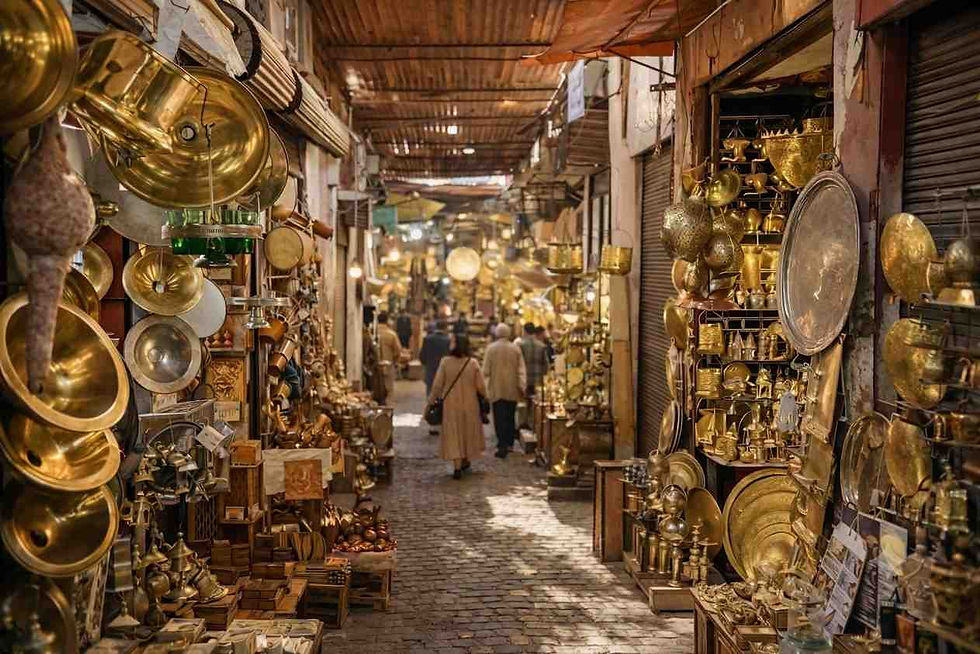
That single answer only tells part of the story though and if you have ever tried to search for something more exact you already know why. There is no municipal office in Marrakech that publishes official souk hours the way a museum or a bank publishes its schedule. The souks are not one business. They are thousands of independent stalls run by individual families and craftsmen who each decide their own rhythm based on the season the weather Friday prayer and simply how the day is going. So when you read "the souks open at nine and close at eight" understand that as an honest average built from many small decisions rather than a rule stamped on a door.
Is it an Actual Closed Gate or Just an Open Street
This is probably the most misunderstood part of the whole question. The souks sit inside covered and semi covered alleys that are technically public streets. During the day nobody locks anything and you can walk through freely at any hour. But once night falls and the vendors have packed up for the evening several of the metal gates that separate souk sections from each other and from the surrounding medina do get pulled across and secured. This is mostly done to protect merchandise overnight rather than to keep people out of a public thoroughfare. Anyone who has tried to walk home through the souks after eleven at night and found themselves facing a locked metal grille where a familiar passage used to be knows this firsthand. If you are navigating the medina late it is safer to use a route that follows the main lit streets rather than trying to cut through the covered souk lanes.

The Morning Wake Up
Marrakech does not rush its mornings. Even though a handful of shopkeepers roll up their shutters around eight or eight thirty the souks as a whole do not feel truly awake until closer to ten. Arrive before that and you will find half the stalls still shuttered and the alleys strangely quiet for a place normally packed with noise. This early stillness has its own charm if you enjoy photographing empty lanes and watching deliveries arrive by handcart. But if your goal is browsing and buying give it until mid morning.
The Midday Lull and the Friday Question
Around midday particularly on hot afternoons the pace slows. Some shopkeepers step out for lunch or simply sit back and wait rather than chase every passerby. Friday adds another layer to this.
Friday is the day off in the Islamic week and it shows in the souks even though almost nothing shuts completely. The morning runs close to normal. Then somewhere between roughly 11:30 am and 3 pm a large number of stalls pull their shutters halfway or all the way down while the owner heads to the mosque for the weekly communal prayer. It is common to see a broom handle or a length of wood laid across a stall entrance. That's the informal signal for closed for now rather than closed for good. The goods are usually still sitting right there in full view because the neighboring stallholders keep an eye on each other's shops.
Some sections take Friday more seriously than others. The clothing souk in particular tends to have entire rows of shops shuttered for most of the day. The bigger tourist facing arteries like Souk Semmarine barely slow down at all since those merchants depend heavily on foot traffic and can't afford to disappear for half the day. By around 3 pm the whole district is basically back to its normal self and stays that way into the evening. If your only day in Marrakech happens to fall on a Friday the smart move is either an early morning visit before 11:30 or waiting until after 3 rather than wandering in right at prayer time and assuming the souks are dead.

Evening: When the Souks are at their Best
Late afternoon into early evening is when most people who actually live in Marrakech say the souks feel their most alive. The heat has broken. The light turns golden along the covered lanes. This window roughly between four and eight in the evening is consistently mentioned by longtime residents and guides as the sweet spot.
What Happens After Dark
This is where people get the most conflicting answers online and the confusion makes sense because two very different things are happening in the same physical space.
The craft focused interior of the souks, the leatherworkers, the dyers, the metalworkers, mostly finishes for the day by early evening. These are working artisans, not entertainment, and once the light fades and the tools go quiet there isn't much reason for them to stay open.
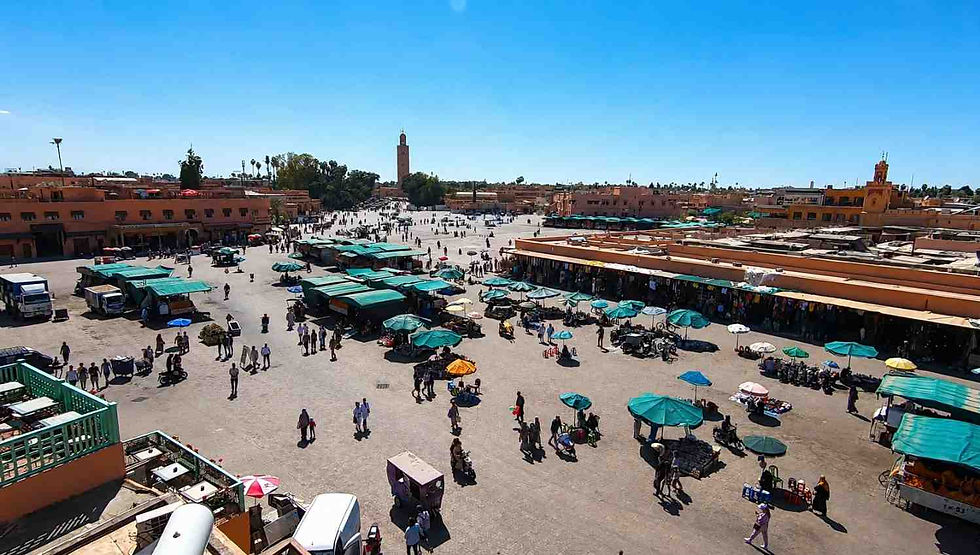
But the belt of shops and stalls closest to Jemaa el Fna behaves completely differently. As the medina's craft quarters go quiet the square itself gets louder. Food stalls that barely exist during the day set up by early evening and the whole area turns into an open air night market that regularly runs until 11:30 pm or later, especially on weekends. A number of souvenir shops right along the edges of the souks stay open deliberately to catch that evening crowd, some until 10 or even later. So the honest answer to is it worth going after nine at night is that it depends entirely on what you're after. If you want to buy a carpet from an artisan, no, that's done. If you want the atmosphere, the lanterns, the smell of grilled food, the crowds and the general sensory chaos, the evening at Jemaa el Fna and the shops immediately around it is arguably the best version of Marrakech there is.
During Ramadan Everything Shifts
If your visit lands during Ramadan expect a noticeably different rhythm. Shops tend to open later in the morning since the fasting day starts before dawn and energy is naturally lower through the daylight hours. Many stalls close in the mid to late afternoon so shopkeepers can go home ahead of the sunset meal. Then after iftar the medina comes back to life in a way that surprises a lot of first time visitors. Streets that were half empty at 5 pm fill up again by 9 or 10 at night with families out shopping for sweets, dates and gifts, and some shops stay open well past midnight. If you're building a trip around Ramadan check the specific dates for that year since the Islamic calendar shifts roughly eleven days earlier annually and plan your souk visits for late morning before the afternoon lull or well after dark rather than the standard daytime window.
Summer Versus Winter
Hours flex with the season more than most guides admit. In the height of summer when afternoon temperatures regularly push past 40 degrees Celsius the midday lull is longer and more pronounced and shops tend to stay open later into the night since nobody wants to be out shopping in the peak heat and both vendors and buyers shift their day later. In winter the opposite happens. The souks wind down earlier, often by 7:30 or 8 pm, since there's less incentive to stay open once the temperature drops and foot traffic thins out after dark.
A Quick Way to Plan your Visit
If you only remember three things make it these. Late morning through early evening covers almost every souk at its liveliest. Fridays are not a day to avoid entirely just a day to plan around the midday prayer window. And once the sun is well down treat the souks less like a shopping district and more like a place winding toward sleep except for the streets that feed directly into Jemaa el Fna where the night is really just getting started.
None of this comes from a printed timetable because none exists. It comes from watching the rhythm of the place itself the same rhythm that has shaped how Marrakech shops sells and closes its stalls for longer than any sign could describe.
Common Questions
Are the souks open every day of the week? Yes. There is no single official closing day. Friday sees a partial afternoon slowdown for prayer and some individual shops take their own weekly rest day which varies shop to shop, but the souks as a whole never fully shut.
Can I get physically locked inside the souks at night? No. What you're actually at risk of is getting lost trying to find your way back through a maze with half its usual landmarks shuttered and dark.
Is early morning or late afternoon better for avoiding crowds? Early morning between roughly 9 and 11 is quieter and cooler. Late afternoon after the midday lull gets busy again and stays that way into the evening.
Do all the shops close for the Friday prayer at the same time? No. It varies by section and by shopkeeper. The clothing souk tends to close more fully. The main tourist arteries like Souk Semmarine barely slow down. Expect the heaviest closures roughly between 11:30 am and 3 pm.
What time should I go if I want to see the artisans actually working rather than just selling? Morning is your best bet, ideally before 11. Dyers, metalworkers and leatherworkers do their hands on work earlier in the day and by late afternoon many have shifted into pure selling mode or have already closed their workshop for the day.

Comments